A sticker food chart made food variety a habit, but children didn't eat better
Who it’s about: Parents

- HelpedHabits
Carers who got a sticker food chart for the kitchen wall more often said they noticed and counted food groups.
- Action: Track your progresstested
- Rule: Put a visible cue where you'll do ittested
- Rule: Have someone help you set it uptested
- Action: Eat fruit and vegetablesused
- Rule: In a single sessionused
Large randomised trial of 2,682 parents of young children in rural India · vs the same feeding training without the chart · they rated themselves · ⚠ whole groups were assigned, not people; summary claims more than the results show; numbers unreliable
- No differenceGoals
Children of carers with the chart were not fed a wider range of foods than other children.
Large randomised trial of 2,682 parents of young children in rural India · vs the same feeding training without the chart · they rated themselves · ⚠ whole groups were assigned, not people; summary claims more than the results show; numbers unreliable
The study
Who took part
2,682 homes in six districts of Bihar, India. Each had a parent or carer, mostly mothers, of a child aged 6 to 24 months. Whole local nutrition centres, not single homes, were put into groups. 2,157 homes were checked at the end.
What they did
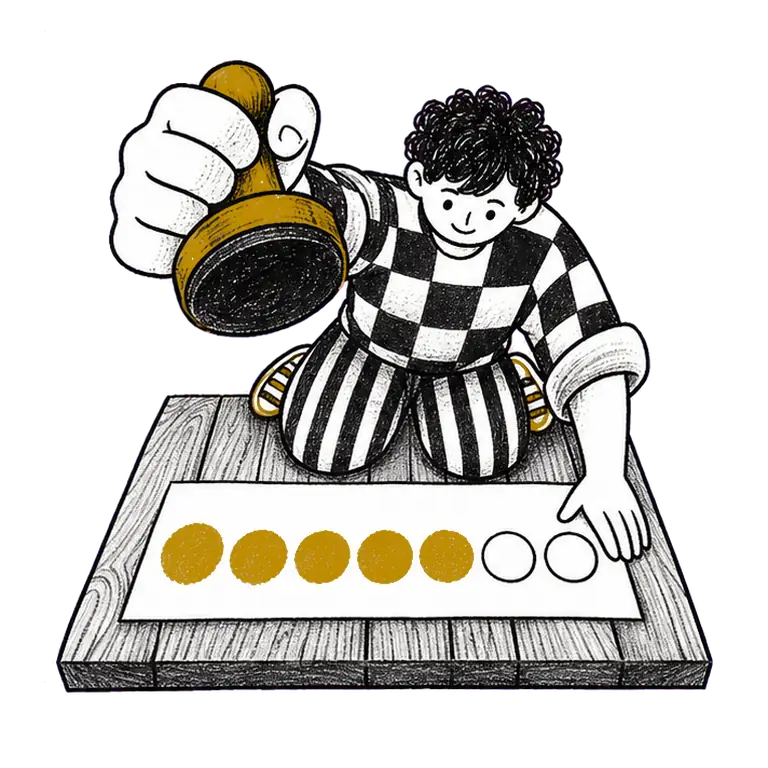
In one home visit, a local nutrition worker gave carers a wall chart and showed them how to use it. At each meal they put a coloured sticker on the chart for each food group the child ate, for about 4 months. Workers in the other group got the same refresher training on feeding young children but gave out no chart.
What happened
At the end, carers with the chart more often said they noticed, counted, thought about and added food groups. For example, about 72 in 100 said they noticed the food groups, against 61 in 100. But children were not fed a wider range of foods. They didn't eat more or grow more either. Only about 6 in 10 carers still had the chart on the wall at the end. The paper's text claims more about diet than its own tables show.
Source
Food Accounting Salience and Dietary Diversity: A Randomized Impact Evaluation of an Intervention to Track and Improve Young Children’s Food Consumption in Bihar, India (2026)
DOI: 10.1596/1813-9450-11461 (opens in a new tab)Tools in this study
Rule · where5
Put a visible cue where you'll do itA sticker, poster, object or wearable prompt at the point of action.
Rule · with whom5
Have someone help you set it upA coach, carer, parent or clinician helps set the plan up.